Best Independent FUGA Alternative for Labels in 2026
FUGA is being acquired by UMG for $775M. Discover why limbo/ is the best FUGA alternative: modular, fully independent, direct DSP and Merlin deals.
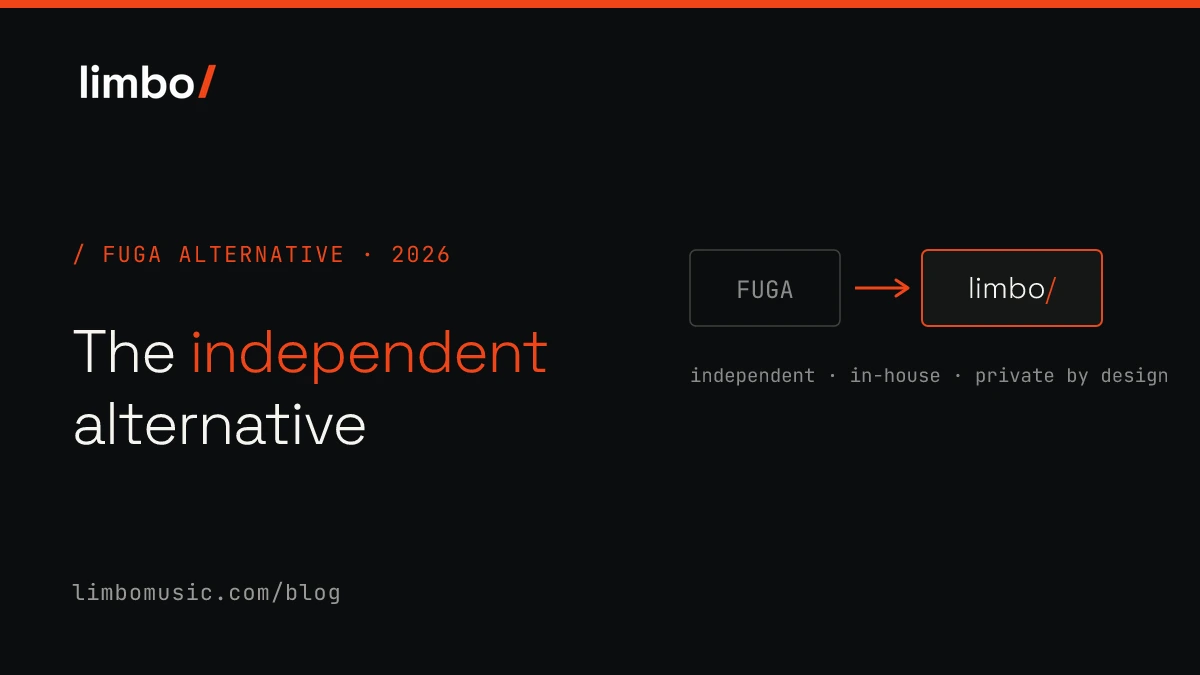
Short answer: for an independent distributor or a mid-sized label, the strongest FUGA alternative is an independent supply chain you can run under your own deals. FUGA now sits inside Universal, through the Downtown acquisition. limbo/ is founder-owned, delivers DDEX-native on ERN 4.3 and 3.8.2, exposes a RESTful API, and lets you keep your own Merlin membership and direct DSP contracts instead of licensing through your vendor.
FUGA is becoming a major label. That changes everything.
FUGA was the default B2B distribution platform for serious independent labels and distributors. That era is ending. FUGA’s parent, Downtown Music Holdings, is being acquired by Universal Music Group in a $775 million deal, and the European Commission opened a Phase II investigation over one specific worry: that UMG would gain access to the commercially sensitive data flowing through FUGA. Data that belongs to UMG’s direct competitors.
If you run an independent label or distributor on FUGA, that is the whole problem in a sentence. Your release schedules, your revenue, your DSP performance, your roster strategy: all of it would sit inside infrastructure owned by the largest major on earth. A platform can be excellent technology and still be structurally misaligned with you the moment a major owns it. Consolidation is only one of two forces on independents in 2026; the other is AI and streaming fraud flooding the DSPs.
So the real question for 2026 is not “is FUGA good software.” It is “who holds my data, and whose interests does my distribution partner actually serve.” We keep a running map of who owns your music distributor.
What a real FUGA alternative needs
Switching for its own sake is pointless. A replacement has to clear four bars:
Genuine independence. Not independent-ish. No major-label ownership, no major-label investment, no board seat that gets quietly acquired two years later. Independence is exactly what FUGA is about to lose, so it is the first thing to verify.
Data sovereignty. The EC’s concern is your concern. Your financial and performance data should be yours, visible end to end, and never exposed to a competitor through your own vendor.
Modular technology. Legacy platforms sell rigid, all-or-nothing packages, so you pay for modules you will never open. Modern infrastructure lets you take only what you need and add the rest as you grow.
Merlin-level access. Competitive DSP economics without a major behind you usually run through Merlin. If your alternative is not a Merlin member, you start at a disadvantage.
Where limbo/ stands
We built limbo/ as a B2B white-label distribution technology platform, bootstrapped, with zero venture capital and zero major-label ownership. We are not independent as a marketing line. We are independent by structure, and there is no acquisition pending that quietly changes that.
That structure is the whole point. Here is how it maps to the four bars:
Independence, permanently. limbo/ has been privately owned and bootstrapped since 2006. Our partners are our investors. No VC clock, no major parent, no incentive that competes with yours.
Your data stays yours. Royalties run on Curve, the platform regulators pulled out of Universal and that Merlin now co-owns, so your numbers are never visible to majors or investors. Every cent of the royalty chain is auditable, with no hidden fees and no opaque commissions.
Modular Music Blocks. Instead of a monolith, limbo/ is built as modular Music Blocks: combine independent modules like White Label, API, Merlin, YouTube CMS, Royalties and Supply Chain into the exact setup you need. A label that wants distribution and royalties does not subsidize features it will never touch.
Merlin and direct DSP deals. limbo/ holds Merlin membership at board level and direct relationships with the DSPs, so independent clients get competitive terms without a major underwriting them.
And one thing that never fits on a feature grid: real people. limbo/ runs on human support, not chatbots, with account management that picks up the phone. When your catalog is your livelihood, you should not be just another ticket number.
limbo/ vs FUGA, briefly
- Ownership: limbo/ has been bootstrapped and independent since 2006. FUGA is becoming UMG-owned.
- Your data: private by design with limbo/. With FUGA, it flows through a major’s infrastructure.
- Architecture: limbo/ is modular Music Blocks. FUGA is a monolithic, all-in-one platform.
- API: limbo/ ships a full RESTful API with a native MCP server. FUGA’s is limited.
- Support: named humans, not a queue.
For the full breakdown against FUGA, SonoSuite and Revelator, read our 2026 white-label distribution comparison. If you are weighing Revelator specifically, see the independent Revelator alternative.
Migrating off FUGA
Moving distribution partners sounds heavier than it is. Catalogs are portable: DDEX-standard metadata, your masters, your rights. The work is mostly sequencing, mapping your catalog, validating metadata and scheduling the cutover so nothing goes dark, and that is the kind of thing our team does alongside you instead of handing you a help doc.
If the acquisition has you reconsidering, that is the right instinct, and the timing matters: it is easier to decide before the integration completes than to unwind it after.
What FUGA costs, and what you should actually compare
Distribution platforms are hard to compare on price because the same catalog is quoted in different shapes. Compare the shape first. Four questions decide the real three-year cost:
- Revenue share, platform fee, or per delivery? Revenue share is cheap at a small catalog and expensive at scale. A fixed fee inverts that. Your growth curve decides which is cheaper.
- What is the floor? Minimums, per-seat pricing and sub-account charges are where a quote and an invoice stop matching.
- What is billed separately? Royalty processing, YouTube CMS, extra tenants, API volume and support tiers often sit outside the headline number.
- What does leaving cost? Export in a usable format, migration effort, and whether your UPCs and ISRCs come with you. This is the number nobody volunteers. Ask any provider, including us, for a three-year total against your real catalog, not a monthly headline.
Talk to us
We do not publish rate cards, because the right setup depends on your catalog and your goals. Tell us what you run today and what you want to own, and we will put together a commercial proposal. Start the conversation with limbo/.
For the wider picture, see our 2026 comparison of white-label distribution platforms, plus the same look at Revelator and SonoSuite alternatives.