What Is DDEX? The Standard Behind Professional Music Distribution
DDEX is the data standard that moves releases between distributors and DSPs. What ERN means, why 4.3 vs 3.8.2 matters, and how DDEX delivery actually works.
What is DDEX, in one paragraph
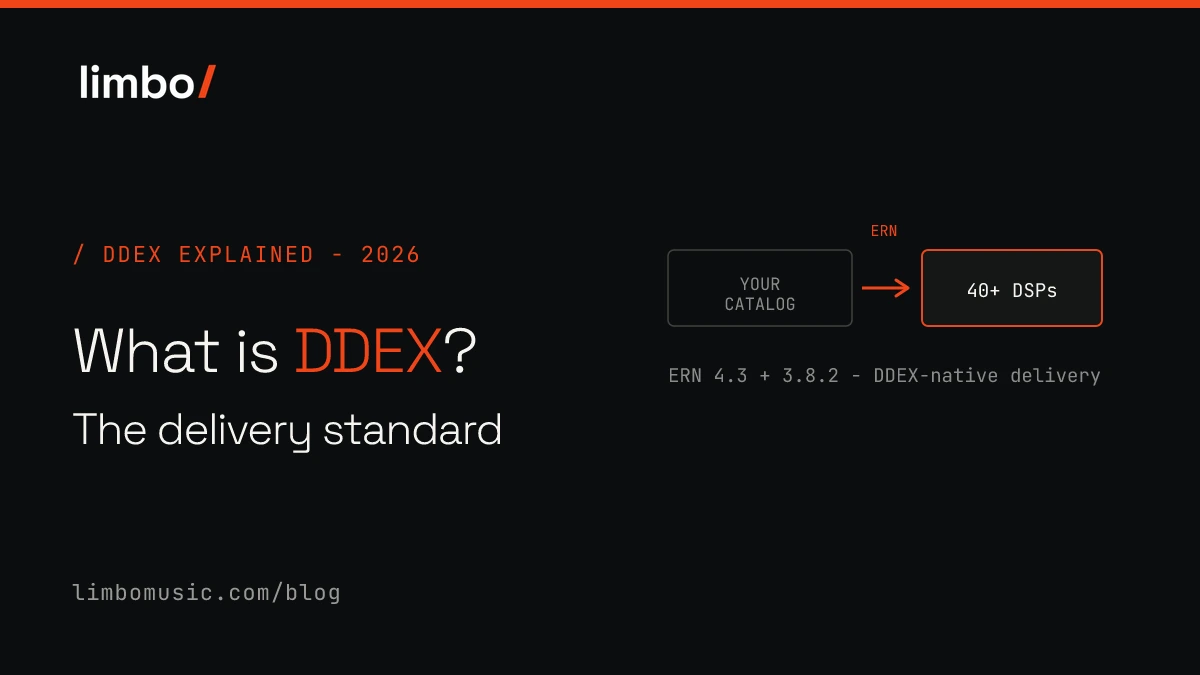
DDEX (Digital Data Exchange) is the industry consortium that defines the standard message formats music companies use to exchange release, rights and sales data. When a distributor delivers an album to Spotify or Apple Music, the metadata, audio references, territories and deal terms travel as a DDEX message. If you run a label, a distribution company or a music-tech product, DDEX is the grammar your catalog speaks the moment it leaves your system.
That is the whole idea. The rest is knowing which messages matter, and what “DDEX-compliant” should actually mean when a vendor claims it.
The messages that matter
DDEX defines a family of standards. Three come up constantly in distribution:
ERN (Electronic Release Notification). The big one. An ERN message describes a release: tracks, artists, contributors, identifiers (UPC, ISRC), artwork, territories, release dates and deal terms. Every delivery to a DSP is, at its core, an ERN plus the media files.
DSR (Digital Sales Reporting). The money flowing back. DSPs report usage and revenue in DSR flat files, which royalty systems ingest to turn streams into statements. Clean DSR handling is the difference between royalty reporting you can audit and a spreadsheet you have to trust.
MEAD (Media Enrichment and Description). Newer, increasingly requested by DSPs: enriched metadata like moods, focus tracks and marketing copy that helps stores merchandise a release.
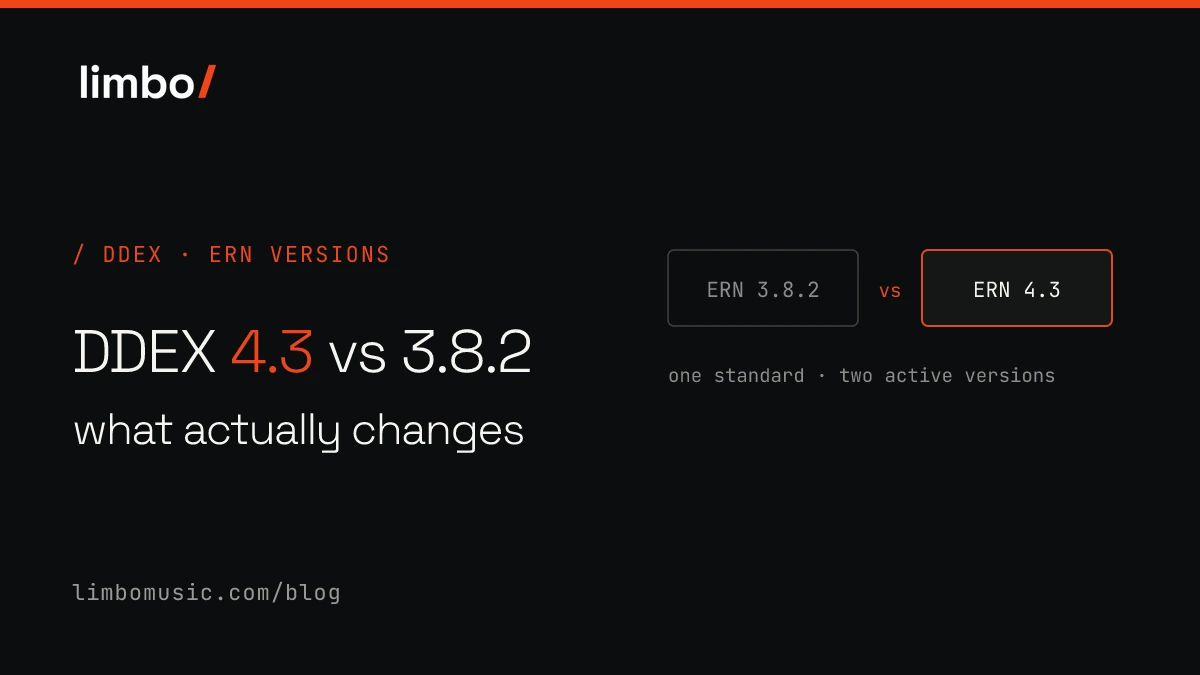
ERN 4.3 vs 3.8.2: why two versions exist
The industry is mid-migration. ERN 3.8.2 is the long-standing workhorse; ERN 4.x is the modern generation with cleaner deal handling and better support for today’s products (immersive audio, UGC clips and more). DSPs adopt at different speeds, so a serious distribution platform has to speak both, and pick the right version per destination automatically.
That per-DSP protocol map is invisible when it works and very visible when it does not. It is also exactly the kind of plumbing a label should never have to maintain in-house. limbo/ delivers DDEX-native, with ERN 4.3 and 3.8.2, choosing the version each DSP requires.
What “DDEX-compliant” should mean (a buyer’s checklist)
Plenty of vendors write “DDEX” on the box. Before you sign, ask:
- Which ERN versions, exactly? “DDEX-compliant” without version numbers is a yellow flag. You want 4.x and 3.8.2 both live, per-DSP.
- Validation before the queue. Broken metadata should fail in seconds with line-level reasons, not die silently three days later at the DSP. This is what AI-powered quality control exists for.
- Identifiers handled properly. UPC, ISRC and contributor data mapped cleanly; bad identifiers are the top cause of misattributed royalties and artificial-streaming false flags.
- DSR ingestion on the way back. Delivery is half the loop. If the platform cannot ingest sales reports line by line, your royalty statements are estimates.
- API access to all of it. If your roadmap includes automation, the DDEX layer should be reachable through a documented distribution API, not only a dashboard.
Do labels need to “learn DDEX”?
No, and that is the point. DDEX is infrastructure: your distributor or platform should own the message generation, the per-DSP versions, the choreography of updates and takedowns. What you should own is the decision of who operates that layer for you, because whoever does sees your catalog and your numbers.
That is where structure matters. limbo/ is independent and founder-owned, delivers to 40+ platforms on direct contracts plus Merlin membership, and runs royalty reporting on Curve, the platform Merlin co-owns, private by design. The DDEX plumbing comes with the Distribution block or through the API and white-label platform, depending on how much of the stack you want under your brand.
Questions about a specific setup? See what DDEX standards limbo/ supports in the FAQ, or start the conversation.
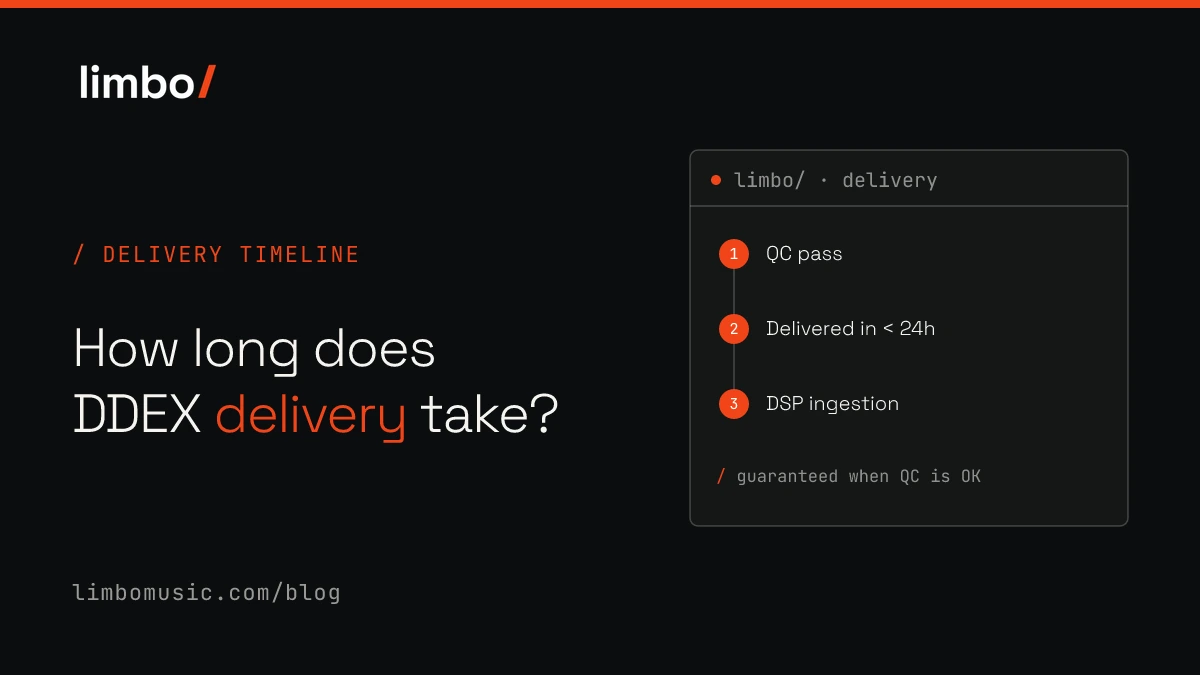
Keep reading: DDEX 4.3 vs 3.8.2, what actually changes · how long DDEX delivery takes · why release dates differ across DSPs